
July 15, 2026
The Hidden Cost of Summer Volatility
Around late January / early February 2026, there is a sharp spike:
- The real-time reserve price (orange) jumps to roughly $55/MWh.
- The day-ahead reserve price (blue) also increases, but only to around $6–8/MWh.
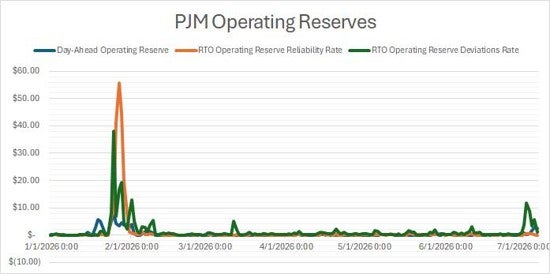
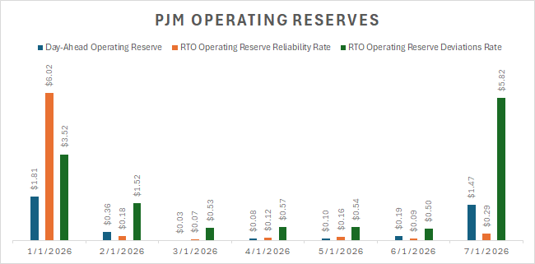
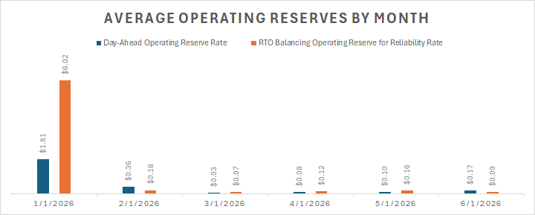
During periods of grid stress (i.e., Winter Storm Fern), the cost of maintaining system reliability can increase substantially. If a customer’s contract includes pass-through provisions, these higher reserve charges may be reflected in their bill. January’s reserve costs were an outlier. That’s when your supplier’s risk management matters most.
While these actions are part of the ISO/RTOs’ established emergency operating procedures, they are relatively infrequent and should not be interpreted as a change in law or market regulations. Rather, they are reliability measures designed to ensure the continued stability of the electric grid during periods of heightened system stress.
Intense weather, such as winter storms and extreme heat, can send wholesale energy prices soaring. While some suppliers pass those additional costs on to customers, the CPV Retail approach is to help manage that risk to provide greater price certainty.
Check your contracts and supplier charges to ensure you understand how these additional costs are handled.