July 20, 2026
Last Week in Power Markets: PJM and NYISO Under Pressure
By: Bob Barron, VP, Energy Management, Competitive Power Ventures (CPV)
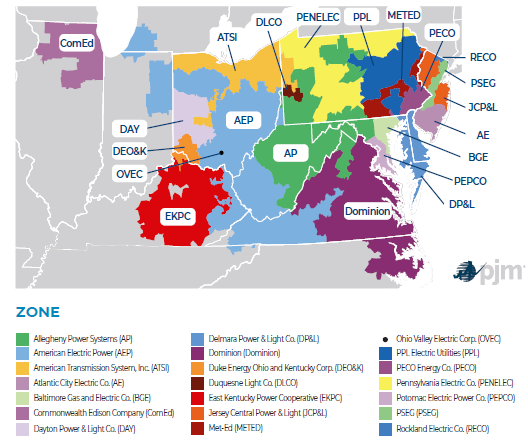
- PJM’s Base Residual Auction for the 2028/2029 delivery year was announced on July 14 and, as widely anticipated, cleared at the negotiated price cap of $325/MW-day. A capacity shortfall of approximately 6,800 MW is expected to be addressed through PJM’s upcoming FERC approved Reliability Backstop Procurement program in September.
- Another mini heatwave has pushed power demand in PJM back at or above 160,000 MW which, like the prior July 4th event, dramatically increased prices and hourly volatility.
- Day-ahead prices at West-Hub cleared at $420/MWH yesterday and the peak price for hourly prices is still ahead of us.
NYISO Regulatory Review
- The retirement of Danskammer has been postponed once again into January of 2027 as the NYISO continues to wrestle with overall tighter supply conditions. Given the bankruptcy status moving forward, is there a possibility of a RMR contract to help support the troubled project financially?
- The state of New York just announced a one-year moratorium on the activation of data centers that exceed 50 MW of capacity. This could impact the ISO’s demand forecast and overall short-term power supply requirements.
- The recent outage on the newly energized Champlain Hudson Power Express (CHPE) underscores the challenges of relying on major transmission infrastructure to meet growing electricity demand. While the project remains an important source of new supply for New York, the outage serves as a reminder that reliability depends not only on adding new resources, but also on ensuring those resources are resilient and available when they are needed most.
Market Drivers
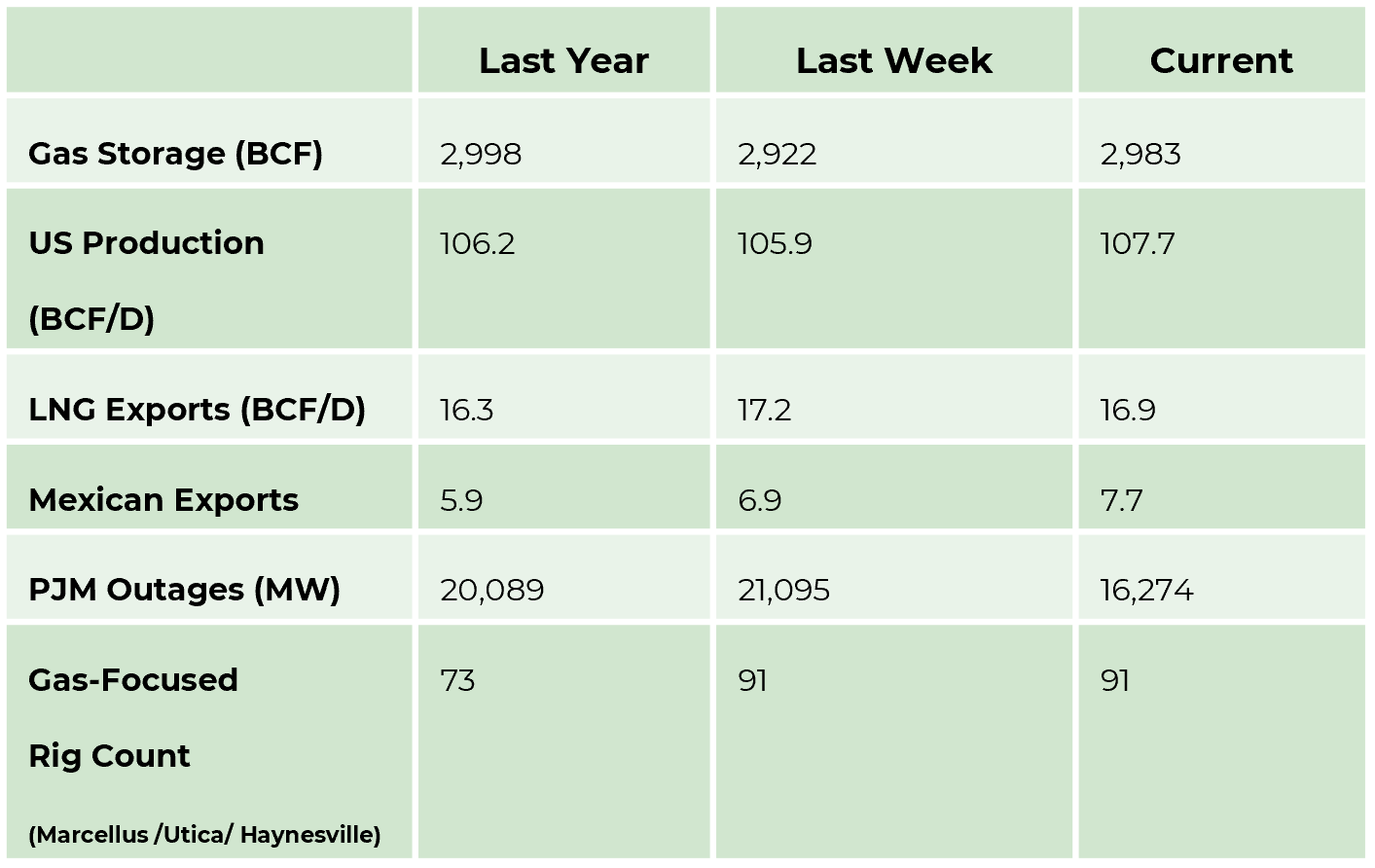
Market Drivers as of July 17, 2026.
- Gas Storage/Year over year difference. A positive number is bearish, and a negative number is bullish.
- Production /Year over year growth/trend is important in the context of demand growth.
- LNG Exports/Year over year growth means demand is growing and should be looked at in comparison to production trend.
- Mexican Exports/Add to LNG Exports to show a trend in exports compared to the production trend.
- PJM Outages- generally seasonal in Spring or Fall/Can support short-term prices.
- Gas Focused Rig Count/Is drilling increasing to grow production versus demand growth. This can be seen as impacting price in the future based on expected load growth.
Energy Market Update
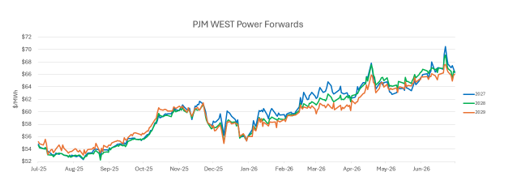
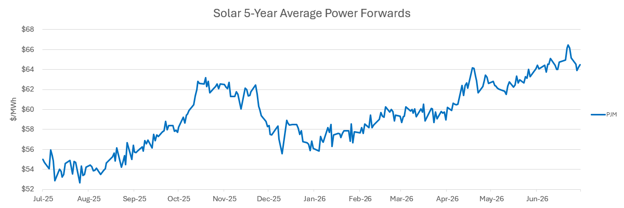
- Natural gas prices remain under pressure even as power prices rally into another widespread heat wave which has PJM forecasting load above 160,000 MW. Day-ahead power prices ripped up to $420/MWH for July 15th and total gas-fired demand reach a year-to date high of 51.6 BCF/D.
- Pipeline expansions out of Waha have relieved the basin of an egress shortage and the negative gas price resulting from these long-standing constraints. With the early start-up of Energy Transfer’s Hugh Brinson 42-inch pipeline Permian Basin producers may finally see the end of plague of negative prices.
- The announcement that the natural gas infrastructure company, Williams, and Blackstone Credit & Insurance are partnering to develop behind-the-meter generation for AI data centers in Ohio further illustrates how the market is evolving. Rather than waiting for grid infrastructure to expand, developers are increasingly investing in dedicated power solutions that can deliver reliable electricity directly to large loads.
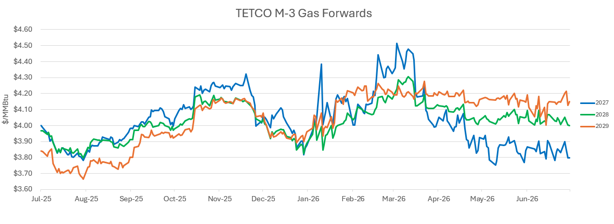
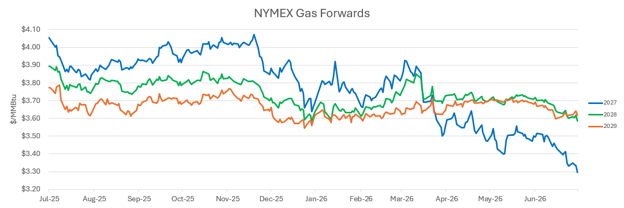
- Calendar/2027 NYMEX continues to trend lower as the market looks to be comfortable with projected winter storage balances and strong US production even as total exports push above 25 BCF/D.